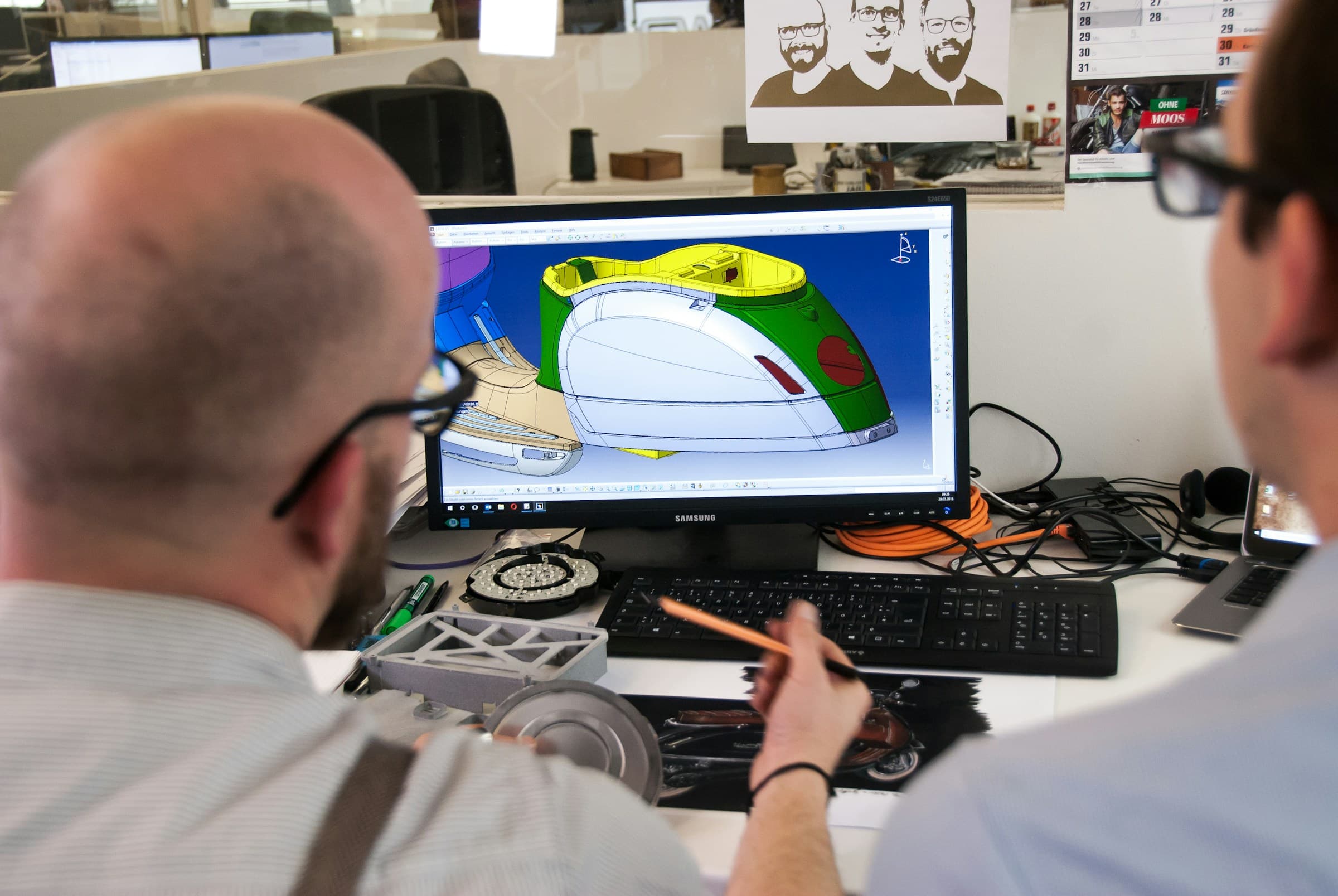
Airframes that look resolved before the first build.
Custom multicopter and fixed-wing platforms shaped around payload, endurance, serviceability, and manufacturing reality.
Focus
Airframe plus powertrain
The structure, payload, propulsion, and service access are considered as one system.
Validation
Feasibility first
CG, thrust margin, endurance, and packaging risks are surfaced before fabrication.
Outputs
CAD to test plan
You leave with geometry, assumptions, and a clear route into prototype work.
Talk to airframe engineering
Send a work email and a few constraints. We’ll reply with a practical view on platform fit and next steps.
What this engagement should leave behind
The goal is not more concept art. It is a platform definition that survives review and builds cleanly.
Outcome
Build-ready geometry
Mechanical layouts, mounting logic, and service access shaped for iteration instead of hero prototypes.
Outcome
Feasibility in writing
Mass, endurance, and integration assumptions documented early so hardware spend happens with better odds.
Outcome
System-level sizing
Powertrain and payload decisions made with the airframe, not bolted on after the geometry is fixed.
Selected scope
We go deep where the airframe is doing real work: packaging, manufacturability, powertrain fit, and the moments that usually create expensive rework.
Platform
Multirotor platforms
From agile 7-inch builds to heavier-lift configurations, each frame is tuned around the actual payload and operating profile.
- Performance or endurance-led layouts
- Clear allowances for maintenance and service
- Mounting strategy shaped around the real stack
Platform
Fixed-wing concepts
Flying-wing and fixed-wing studies with integration, stability, and endurance treated as first-order design constraints.
- Equipment bay and access strategy
- CG envelope considered before detailing
- Packaging decisions tied to endurance goals
Making
DfAM and prototype logic
Additive manufacturing used where it accelerates learning, reduces part count, or enables cleaner packaging.
- Rapid-iteration geometry
- Lightweight structural thinking
- Print-ready parts with assembly sense
Integration
Payload and power integration
Motors, ESCs, batteries, avionics, and mission payloads sized with the airframe instead of in separate streams.
- Powertrain fit and routing awareness
- Thermal and access considerations
- Upgrade paths kept visible where useful
Working style
A compact sequence built to remove ambiguity before detail work becomes expensive.
- 01
Define the envelope
We start with payload, range or endurance targets, operating conditions, and the hard packaging constraints.
- 02
Test feasibility early
Trade-offs around CG, thrust margin, integration load, and manufacturability are worked through before release.
- 03
Detail the platform
The geometry, interfaces, and access points are resolved into a mechanical package ready for build discussion.
- 04
Release with context
CAD, assumptions, and validation notes arrive together so the next engineering step is obvious.
Typical deliverables
Clean outputs your team can continue from, whether the next step is prototyping, procurement, or internal review.
Deliverable
Airframe CAD package
Assemblies, mounting geometry, and manufacturing-oriented outputs for the chosen direction.
Deliverable
Feasibility memo
Mass, endurance, CG, and integration assumptions captured in a form that can be challenged and reused.
Deliverable
Stack recommendation
Powertrain and avionics decisions aligned to the airframe instead of treated as a later patch.
Deliverable
Validation plan
A practical sequence for prototype build, bench checks, and the next iteration loop.
Related disciplines
Adjacent services for teams working across the stack.
Define the platform with less guesswork.
Bring the payload, the envelope, or the constraints that are still unsettled. We can turn that into a clearer airframe direction and a build-ready next step.